Tuesday, February 05, 2019

My latest poem in Spark is for all the closet romantics out there. Read on.


Who Writes Things Like These?

The stars, the moon, the sun
They fade in the face of your glory,
The ripples on the grandest lake
Aren’t a patch on the dimples on your face.’
‘Who writes things like these?’
He thought to himself.
‘Those eyes, those limpid pools
Those melting pots of honey,
Those purveyors of great words
Without ever making a sound.’
‘Who expresses their love like this?’
He shook his head as he read.
‘There is none but you
I am nothing without you,
I’d leave this world in an instant
It’d be living hell without you.’
‘Oh, these lovelorn people,’
He smiled as he folded the paper.
The poem had come his way,
Left behind on a seat of a bus.
Did the giver forget it?
Or did the recipient leave it behind?
This wasn’t how he expressed love—
He, of the repressed silences,
And wordless gestures,
Of the meaningful touches
And quiet support.
He went home to that quiet wife of his
Who matched his silences with hers.
And on they went to the end of day—
Food consumed, clothes changed
And his gentle snores beginning
To fill their small bedroom.
She picked up a book for her daily read
And found a new bookmark in it—
A paper, yellowed slightly and folded gently,
Placed there furtively by that sleeping man
Knowing well she’d discover it.
She smiled as she read the words—
Ones that he would’ve never written
Ones that he would’ve never said aloud:
‘The stars, the moon, the sun…’

Wednesday, January 09, 2019

Annus Moviebilis VI

Year six of tracking movies seen. This was my lowest score in recorded years. This was mostly influenced by the fact that I ran out of things to watch on Netflix and Amazon. The number of shows that I saw also went down from 24 to 20. This was a year where I consciously read more and watched less.

Scores:

2008: 99
2014: 86
2015: 105
2016: 116
2017: 132
2018: 78

The full list of movies can be found here: https://1drv.ms/x/s!AsQ_MU1XkvrDiOFLMt-xanpoZFOW3w 

I am going to take a break in doing this meticulous recording of movies and shows for 2019 so I can break free of that thread in my head that can't let go of this statistic. 

Let us see what happens in 2020.

Saturday, January 05, 2019

The Almirah

Remember that steel almirah in your parents place? And that beautiful creak and shriek that happened when you tried to open it? That hunk of metal that we all trusted our lives with?
Mighty privileged to get published in the 9th anniversary edition of Spark with my little trip down memory lane.

http://www.sparkthemagazine.com/the-almirah/

The Almirah

I was back at my parents’ house. But I had not come back alone as the prodigal son. This time I had returned as a parent myself. My two kids were sleeping on their grandparents’ bed, exhausted from having spent their morning baking in the hot Mumbai sun. I realised that this was my chance. I decided to steal a few precious moments of downtime to myself, to indulge in an activity that was close to my heart. The joy of looking through old pictures.
I tiptoed in, careful not to wake up the sleeping devils. The bag with the pictures I sought was in a cupboard. An almirah. ‘Almaari’, ‘kabaat’, ‘beero’, and other isolated terms as it is referred to in different Indian households. That trusted steel almirah, typically made by Godrej, in shades fluctuating between the grey and the green, taking pride of place in the bedroom.
I twisted the handle ever so slightly. As a kid of the 80s, I knew that unlike the modern day cabinetry which promises the smooth, silent glide of a samurai sword coming out of its sheath, the cabinetry of my childhood was as noisy as the gates of haunted mansions opening up in horror movies. I must have lost my touch, for, despite my efforts, the opening of that Godrej almirah was followed by a large groan and a shriek. The kids woke up. And I bid goodbye to a promising afternoon.
I patted the almirah gently. I could scarcely be mad at it. There it was. That guardian of treasures that was almost as old as I was and very dear to my parents. That cacophony that accompanied its opening it was part of its charm.
Every family that I knew growing up had one of these in their homes. That perfectly cubicled almirahwithin which the most important assets of the household were preserved. Clothes, photographs, documents, ornaments.
The bottom half would usually be split into three equally distributed horizontal drawers. The top half would have two vertical separations. The one on the right was for hanging clothes. Sarees, ironed shirts, that odd coat that would rarely be worn. The left side would have a few more horizontal partitions.
‘His and Hers’ were all part of that same almirah. Oh, and so were ‘his and hers’. I remember the arrangement of my clothes jostling for space with my mother’s sarees and my father’s bushirts. Of course, you would never be so blasé as to let the clothes touch the steel base. You’d first tear up newspapers and arrange them at the base of each drawer and only then would you put the clothes on it. The newspapers would change frequently. So while the headlines of Rajiv Gandhi’s assassination would stare at us for months, Tendulkar’s century at Perth would also be remembered each time I would pick shirts from the bottom.
The most critical records of our lives found their way to the vaulted almirah. The most precious pieces were saved in the almirah within the almirah. A drawer that would act as a safe and had its own key. This is where the jewellery, the money would be hidden. Godrej must have trusted its own manufacturing to a great extent for any robber would know exactly what to break open to make the most of what the house had to offer.
The almirah came with its own set of keys. Thick, gleaming, long keys that hung from a bunch. While it was not true of my mother, I have seen many other households where that set of keys would be tucked into the waist of a saree wearing mistress of the house.
Whether it was my parents’ place or at the countless others where these boxes of secure storage would be found, some things remained constant.
The almirah, when opened, paved the way to a family’s treasures. The almirah, when closed, played host to the family’s vanity. Along the height of the almirah would run a half length mirror that would be the perfect place to make sure that the comb had fixed up the hair stylishly, that the fall of the saree was set correctly and that the shirt was tucked in evenly. As if the ornate etching on the side of the mirror was not sufficient, the mirror would be decorated by bindis.
And as if the almirah wasn’t utilised enough by the space provided to store things inside it, the space between the almirah and the ceiling was used to store things as well. Stack of bags for travel, a cycle that isn’t being used anymore, giant pots. There truly was no end to what that patch of a few square feet could accommodate.
Over the years, amidst its layers, the history of a family built up in that almirah. The layers of objects that made up its contents became a sedimentation of memories. And as the family aged generation by generation, the almirah too grew old and started to rust. Patches of its decay would start spreading unevenly across its surface. A little mark of dark brown near the bottom, a bit of paint scraping away from its top. The almirah grew old with its owners and yet, like every family, strengthened its bond among its imperfections.  It was like that unopened bottle of wine that gathers dust on the outside but blossoms in its flavour from the inside.
Times have changed now. The Indian middle class is upwardly mobile and artisan wooden cabinetry is slowly taking over from this trusted storage mechanism. And yet, the almirah continues its role faithfully in the houses of older people. It serves as a totem pole of memories and its creaks are the sweet sound of a bygone era, a nostalgia that I revisit each time I go back to my parents’ house and attempt to twist that handle ever so slightly.

Monday, October 08, 2018

A Bookstore Rescue

I am back to publishing on Spark after a gap when I was busy with the book release.

Here's a little poem on a troubled man and the unlikely release he finds.

A Bookstore Rescue


“You are three months late …”
Went the letter that he kept away.
With slouched shoulders, the defaulter
Walked out of his apartment.
He felt breathless, suffocated, boxed in,
Squeezed by tragedy’s relentlessness.
A house he may lose, a wife he already lost,
No prospects, no love, no lovers, no money.
And then, the skies opened up,
On misfortune’s favourite child.
In despair he took flight to reach
His beloved place of escape.
The store welcomed him.
With books on endless shelves,
The mass of human knowledge,
Brimming, toppling over.
Books were his lodestone
On sombre unsettling days,
Where words were his balm
To remedy the bruises on his soul.
He walked along the aisles,
Skipping past Philosophy, Art,
And that ever alluring History.
None drew him in today.
He didn’t give a second look
To the Cooking section
Or the absorbing treatises on Politics
Or the holy tomes on Religion.
Enough, he thought, of this world
In all its gory complexities
And its gruesome grimness
And its excessive dose of reality.
And so, as light as a feather,
He skipped to the end of the store,
To the colourful racks and the bright pictures,
To the lively and bright Children’s section.
He collected ten books on a whim.
Stories dipped in pixie dust,
Simple fantasies, uncomplicated lives,
Unburdened souls, Uncluttered morals.
He read them all, not realizing the irony.
Here was an adult escaping into
A world written by other adults,
Who were attempting to do the same.

Saturday, August 25, 2018

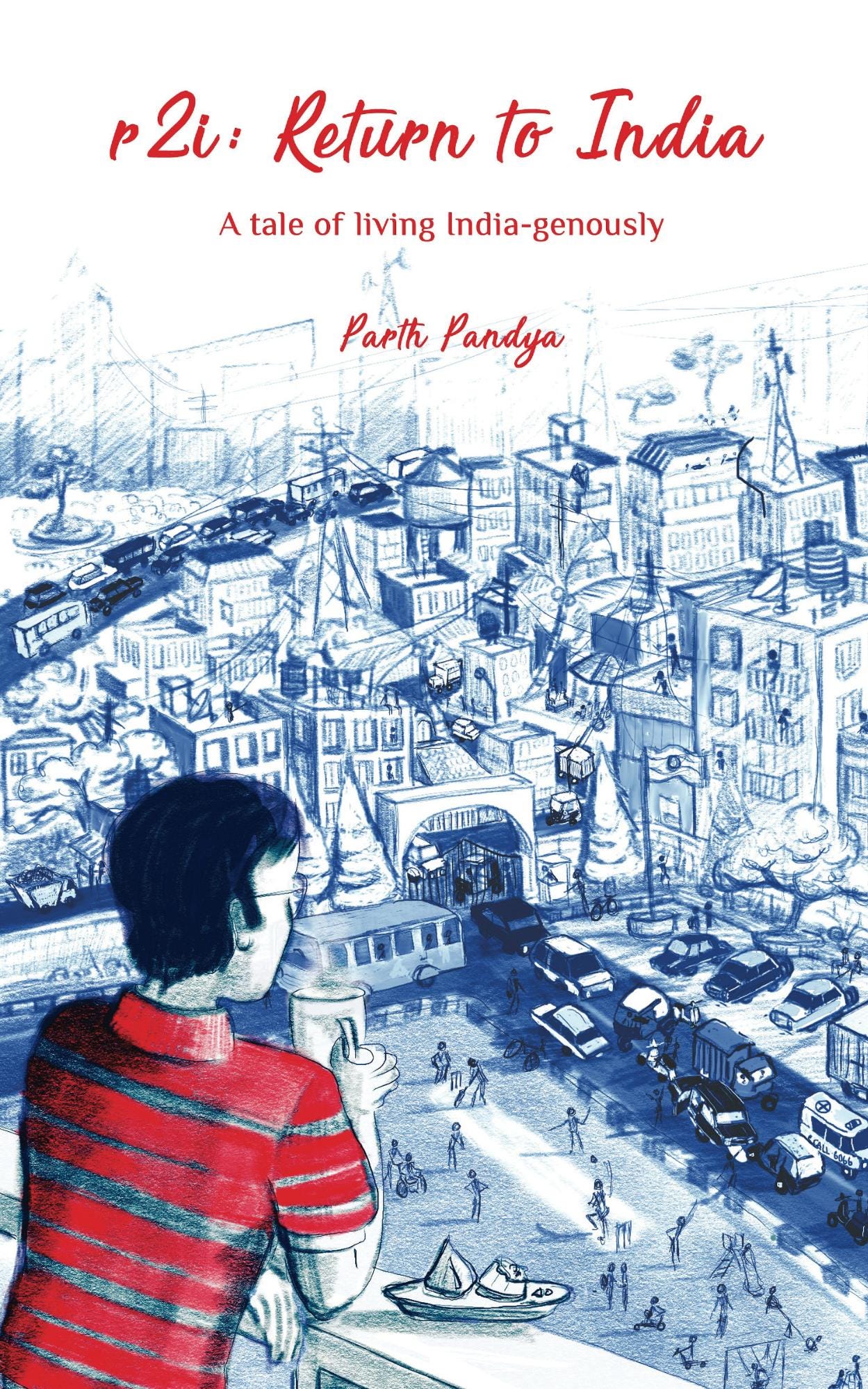
Book release: "r2i: Return to India"

I am very excited and proud to announce the release of my 2nd book, ‘r2i: Return to India’.

I had decided to write this book over two years ago when I r2i-ed to India and I am grateful that I had a story to tell and the persistence to see it through.

The book is a chronicle of my r2i experiences and I hope it interests you, entertains you and touches you in ways that my second innings in India has.

Please find the book at the following locations:
Kindle (worldwide): https://amzn.to/2P75lU9
Print (US and RoW): https://amzn.to/2P75lU9
Print (India) : https://pothi.com/pothi/book/parth-pandya-r2i-return-india

r2i: Return to India


Tuesday, June 05, 2018

The Girl with the Whiskey Voice

The old pine for youth but youth may not offer everything expected of it. Read my latest poem published in Spark magazine.

The Girl with the Whiskey Voice

They called her
The girl with the whiskey voice
Like ether held together, with water
Perched on a delicate stool
She sat on the stage alone
Tuning her guitar to her soul
She was all of twenty-three
Youth coursing through her veins
Through unclogged arteries and nimble joints
And yet her soul was a fragile parchment
The scars of her past were
Stories preserved with ink and vinegar
They sauntered in every night
Filling in that little joint
With smoke and their emotions
Each moth bringing their baggage
As a homage to that iridescent flame
− Lust, love, admiration, sorrow
They fed off her youth
Off the fullness of her body
Off the absence of any blemish
Off that freedom from responsibility
Off the freedom to dream
Off the freedom to just be
But youth is sometimes
Just a promise of an oasis
A mirage to those removed from it
The girl with the whiskey voice
Was a soul aged with torment
And wisdom of a life lived precociously
The night began and she sang of love
And youth returned to those who heard
While she travelled to an older time

Tuesday, May 08, 2018

A Love Affair

A woman arrives in a city that was never hers and soon becomes a fragment of that whole.

Read my latest verse in Spark that tells the woman’s story and her relationship with the city that took her hostage.

A Love Affair

This city was never hers
She belonged to a calmer origin
Where the sun rose and set unabated
By sounds and dust and other filters
Now she lives in a place where
The sun in incidental and silence is a transgressor
Her shadow on the walls of her house is
A pantomime magnified on cracked lime
The city was never hers
But she now belonged to the city
She inherited her labels from it
She bequeathed its various moods
Her parents wondered why
She laboured in a place far away
In that cauldron that consumed
Dreams, peace and sleep
They did not know that she was escaping
Memory’s short-changing trap
An unrequited love, an unfulfilled wish
And a relentless, unremitting ache
Her surrender was an escape
And the city gladly took her hostage
She was now a part of a whole
A speck of dust in a giant dustbowl
The city was her lover now
Filling the voids she surrendered with
She roamed within its ironclad doors
Free as a bird in a giant cage

Friday, April 06, 2018

The Secret Life of Unfulfilled Dreams

Eight years ago, a non-profit literary e-zine was started by two very passionate editors Anupama and Vani. Today, Spark published their 100th issue. I have been privileged to publish in 84 of them!
They invited me to contribute to the issue with a non-fiction topic of my choice. The topic I picked is 'The Secret Life of Unfulfilled Dreams'. In this case, my dream to write. Hope it inspires you to pursue yours!

The Secret Life of Unfulfilled Dreams

The stage is on fire. Not the literal kind of course. It has been set alight by the mesmerising performance of the music band. Their lead singer has the audience eating out of his hands. His strong, clear and melodious voice travels through the speakers to the one hundred thousand strong audience. They are chanting his name. They are in the midst of an evening they will not forget for the rest of their lives. And he isn’t just singing. He is playing the guitar too like a virtuoso. His tresses fly in the air as he shakes his head and plays riff after impossible riff. It is heaven. It is a dream.
(Well, it actually is.) The singer wakes up. The singer is me. The dream takes its roots from a slice of reality. I was in a band as a tabla player. When a performance would get over, it was the good boys – the keyboard player and the octopad player and the tabla player – who would be quietly packing up their instruments while the lead guitarist and the vocalist would have admirers swarming up to them. Having not learnt either how to sing or to play the guitar and possessing very moderate skill in playing the tabla, I decided to stay content with visions of that glory. While the dream itself has tempered down over the years because practicality has taken over, the part that I wish would really come true is that about the abundant hair.
We all have dreams. They fuel the effort we put in towards leading a fulfilling life. The whole point of dreams is for them to be unreasonable. ‘Stretch goals’, as they are referred to in corporate jargon. The arc of dreams goes from the impossible to the mildly possible as we seep into the regularity of our lives. Our entrenchment in the world of responsibility takes the edge away from the fantastic nature of dreams.
We bridge the gap between the fantastic and the plausible each day, to walk away with a sense of success. Not all of us are Sachin Tendulkar. He dreamt at the age of 11 to play for India. As a kid, I did the same. Who wouldn’t want to take on those pesky Aussies in their backyard and smash them all over the Sydney Cricket Ground? But by the time I reached my twenties and I found myself more adept at creating PowerPoint slides than hitting good bowlers for boundaries, I moderated my desire. I would now envision myself hitting the winning runs of the final ball of the finals in my local cricket league. A touch of pragmatism in the world of dreams never hurt.
I’ve had one such dream and it relates very much to the place you are reading this work. I grew up dreaming of being a successful writer: a picture of me with all my brooding intensity would be on the back cover of the book which would be stacked up in piles beside my table in the busiest bookstore in the city, where I’d be signing copies of my book. Sure, I had a knack for telling stories, but even in my limited peer group, there were others who were better. Life too had other plans and like so many people who did it every year, my life went in the rather prosaic field of engineering.
I didn’t let go of the dream though. I tempered it. I took to writing on my blog. That process of writing on my blog week after week, month after month, year after unflinching year helped me gain the belief that maybe my writing was worth more than I gave myself credit for.
I decided to expand my horizons. The first place I took my writing to was Spark. I realised that in my current station in life, the ability to produce quality work month after month which was critiqued and validated by editors who knew what they were doing, was fulfilment of a lesser dream. In the process, that dream became all the more endearing.
For me, writing has always been about a two-way conversation. I want people to read my work and be moved (or disappointed) by it. I want to hear if they found a poem moving or the ending of a short story surprising. Spark gave me that forum.
Since no one had filed an injunction against me for writing more, I took it as a sign to spread my wings further. That latent dream of an eight-year-old boy was brought to fruition −I published a book. I co-wrote a book called ‘r2idreams’ about the Indian immigrant dilemma on whether to stay or to go back to India.
The book came about despite having a very hectic job and two very hectic kids. I was driven by a sense that this story needed to be told and I was the one to tell it. Fulfilling the dream was not easy but it was fulfilled nonetheless. The story hit its mark with many readers and the reaction left me elated and vindicated.
For years, I had shelved the thought of doing anything big beyond my field of work because of what I had imagined to be the sheer difficulty of it all. My attempt at breaking through this chain of thought (pun intended) taught me otherwise.
I have two young kids who are not bound yet by the chains of pragmatism. They dream of going to the moon for a weekend picnic and being the number one tennis player in the world and of having the ability to time travel and having a magic pen that would write their homework for them. I cherish these without judgment and am careful not to discourage them. Who knows what will spark from these little aspirations blooming out of their imaginative minds?
I often find myself unwittingly becoming a motivational coach for my friends and family. I see people abandoning their pursuits, selling themselves short or abandoning their aspirations to merely sail through their lives. That deserted attempt at running a half marathon, that dream trip to Ladakh that has been put off, that painting that has been unfinished, that novel that has not been attempted. I am always on their case and I take great satisfaction in the few success stories I have been able to engender.
To me, the pursuit of my dreams has given a lot of fulfilment and if there’s one thing I want to tell others it is this: Find that unfulfilled dream of yours. Let it breathe. Let the dream live. Trust me, their secret lives have a lot to offer.

Tuesday, March 06, 2018

The Mannequin In the Window

A man invests his dreams in a shop and a mannequin in the shop window bears testimony to it.
Read my latest publication in Spark magazine which tells the story of that man and the shape his dreams take.


The Mannequin In the Window

There is a large glass window
in front of the shop
that is now dwarfed by a huge
shiny mall that has come up next to it.
The establishment of “K.K. Tailors” was once
a shiny diamond among aging ones,
when its doors first flung open.
Krishna Kumar sewed his initials
into those “Safari suits” he specialized in −
sewing for those middle men
who trudged to the corridors of power,
where other men who wore kurtas
ruled as if by royal decree.
When the shop was opened in Connaught Place,
Krishna Kumar had installed a mannequin
in the shop window (though he didn’t need one),
and a picture of Indira Gandhi behind his desk −
the only feminine presence in a shop
which advertised itself as “Men’s tailors”.
The mannequin went from wearing
safaris to bushshirts to cotton shirts
to polyester creations,
keeping up agelessly with the styles
that the patrons sought K.K. out for.
The shop window started tainting
as the years passed.
The shop that was once new
had peeling plaster and power cuts
and a moldy flavour that travelled
back with the few who still bothered
to get their clothes stitched.
Bit by bit, the window’s blots grew
despite K.K.’s loving attempts
to clear the fog away.
And it was one day that resembled every other
that K.K. looked at his mannequin
and said, “We have faded”
and shut the shutters on his thirty-year dream.
Now he lives in a cramped and clean
flat in Lajpat Nagar,
with a rusty trunk in the corner of his room
that he keeps locked at all times,
lest his grandson steal away.
It holds within it
a cut of Safari cloth, a picture of Indira Gandhi
and the torso of a mannequin
hunched at the shoulders
bent by years of bearing dreams
and falling short in the end.

Tuesday, February 06, 2018

A Sibling Squabble

Are you a parent of two kids? Or been a sibling yourself?
Read my poem from the latest issue of the Spark magazine on the bitter-sweet encounters between the two boys in my house and the underlying affection that binds them together.

A Sibling Squabble


Was I meant to be born with a whistle?
Refereeing two parties, forever aggrieved –
Two pugilists in their own corners,
One in the blue pajamas and one in red.
That little combatant is slouching on the couch,
Hurt and tears clouding his eloquence.
“He did. It was he who is making me cry. Ask him,
Ask that big brother of mine.”
That accused is standing with his hands folded,
His face contorted in righteous anger.
“Ask him what he did before that. Ask him,
“Ask that little brother of mine.”
I linger in that moment of déjà vu.
I am the civilian in the cross hairs
Of two little men and their gigantic passions,
Each assuming my bias against them.
But silence gradually wins the fight
As words start simmering down,
Like a balloon losing its air
And then fluttering unpredictably.
Their fight lingers on in my mind,
But it has vaporised from theirs.
The memories of that passionate spat
Are buried under peals of laughter.
The contretemps are but reminders that
They often can’t stand each other.
Only reinforcing a truth that
They certainly can’t be without the other.

Tuesday, January 09, 2018

The Death of Blogging

Remember the days when everyone had their personal blogs? The days when you posted fearlessly and someone actually read it? The days when you met new people through your blog? Those days are over.
Read my article in the Spark magazine which goes into a journey through that phase.


The Death of Blogging


The year was 2004 and I had launched my personal blog titled ‘Solilowkey’. Now that I think back to it, I can’t put my finger on what prompted me to enter the world of blogging. I had been an accidental writer through my school and college years but there never was a fixed outlet for all my work. I had the frequent daydream of being a successful writer whose books would adorn the shelves of bookstores and who would read from his books to spellbound listeners. However, there was no intent to pursue that dream. The blog was a certainly a new outlet but without a particular focus.
Blogging was an accidental discovery but it turned out to be a fortuitous one. I started writing more regularly than I had in a long time. Short stories, poems, commentary on all things I cared about, translation of ghazals – they all made an appearance on those virtual pages. For someone who had not kept a private diary, I was now maintaining a public one.
The beauty of the blog wasn’t just that I was writing. It was that I was now engaging with readers. Since there were no other means of promoting the blog (social networking sites were non-existent then), the people who came to the site were the ones who stumbled upon it. And they read. And stayed. And commented. Through these interactions and my own process of stumbling upon other blogs, I slowly formed a network of bloggers. These were strangers who were hiding behind online identities. Our only knowledge of each other were through the words we had shared. In some cases, the barriers of the anonymity were breached and I made new friends. The kind whom I had not met in real life but whose essence I had become familiar with through their words. For what else is writing but a conscious effort to bare your soul.
Blogging was new. Blogging was attractive. And blogging allowed for discovery. The internet was growing by the day but without the presence of social networking, people relied on e-mail and instant messaging solutions to communicate with one another. In short, the distractions were limited.
Some Indian bloggers that I knew turned my daydream into their reality. By being diligent about blogging and offering interesting content, they started building a following that would far exceed amateur bloggers like me. Bloggers like Arnab Ray (of the Great Bong fame) would go on to publish books, fuelled by a recognition that his blog had allowed him.
While they had been launched in 2004, Orkut and Facebook started really catching on as the decade was coming to a close. A new form of dopamine was unleashed on this world. Suddenly, everyone’s basic desire to be connected intimately to the lives of others came true. The possibilities were infinite. You could spend hours trying to hunt down the people you have lost touch with. For others, the engagement was passive and yet time-consuming. The age of the smartphone also meant that this addiction was fed during every waking moment. If this was not enough, a low bandwidth messaging solution called WhatsApp also invaded this space. And let’s not leave out the democratisation of video content through YouTube.
Suddenly, the world was in your pocket and was refusing to leave. The reading habits of people changed slowly but surely. This might not have been a conscious choice but with a finite amount of time at hand, something had to be nudged out for a new way of life to take its place. When I reflect on my own habits, I realise that I went from being a voracious reader of both online and offline content to spending an enormous amount of time on social networking sites.
I was posting on my blog with the same frequency but fewer people were reading it. Bit by bit, the other bloggers I knew started exiting the medium. Their rationale was very similar. No one ever came. No one ever read. The conversation with the readers which was one of the more enticing parts of the experience was vanishing.
Only the top thrived and prospered and they did so by bringing their blogs to the newer platforms. They would have active Facebook profiles and would share their blog posts there. In turn, like a rolling stone, good articles would get picked up and passed around. For the rest of us, it was down to watching cat videos and liking pictures of each other on Facebook.
Fast forward a few years and we are now squarely in the world of dwindling attention spans and increased distractions. The same social networking tools that were once in their stages of inception now have tentacles that reach deep into any empty moment that poor humans might have. You would know this if you have ever received every forward ever in your family WhatsApp group, or an ongoing thread on Twitter that you can’t get out of, or those pictures on Instagram by your favourite celebrities who simply can’t stop posting, or those pesky Facebook user targeting algorithms that hook you with exactly the things you ‘need’ to read.
In this new world, the blogger is fighting a losing battle. A well-written short story never has a chance, being buried in the avalanche of everything that sits atop a pile waiting for attention. Even the type of writing that grabs eyeballs has differed. WhatsApp is primarily driven by misinformed forwards and GIFs containing good morning wishes. Facebook is littered with short Instagram style posts focusing on humour. Even the long form of writing is mostly governed by your echo chamber. Outrage writing or deeply personal stories make the top of that list. A blogger would now have to truly put their writing explicitly in front of the readers to get eyeballs.
I deal with this issue personally. When I publish my short stories and share them on Facebook, I often post and re-post it because I have little faith in Facebook’s algorithm to show this to the end user. Often times, I actually (against every fibre of my being) send these articles in instant messages to my reader to get them to pay attention.
Blogging is dead. The age of serendipitous friendships between bloggers is passing. The blogger as we know it needs reinvention, or risk being irrelevant in a world that increasingly values short and vapid things to read.

Sunday, December 31, 2017

Annus Moviebilis V

Year five of tracking movies seen and I am happy that the #100moviepact that I signed up for was met. This was my highest score in recorded years.

Scores:

2008: 99
2014: 86
2015: 105
2016: 116
2017: 132

The full list of movies can be found here: https://1drv.ms/x/s!AsQ_MU1XkvrDiNBYccb81rTOPrnS_w 

In addition to tracking the movies that I watched, I also tracked shows this year. The count for total seasons of shows watched was 24.

Tuesday, December 05, 2017

A Whiff of Perfume

It is the simplest actions that trigger the sweetest memories.
My poem in this month's Spark magazine is an ode to a small slice of my childhood, prompted by my own children.


A Whiff of Perfume

On lazy Bangalore Saturdays,
when we are about to set out to eat
and then return for a well-earned siesta,
my boys come to me with their arms raised,
waiting for me to spray my perfume
on their shirts over their armpits,
on their unsullied bodies,
rejoicing in this little ritual −
quite unnecessary yet wholly satisfying.
It takes me back to my many summers in Surat,
an annual ritual of my childhood,
when my cousins and I
would raise our arms in surrender,
to the uniform perfume that was sprayed on us.
United in blood, united in fragrance,
we would exit into the streets
of a city that didn’t seek a
sense of purpose to exist.
Nothing ever happened there –
nothing needed to.
We were happy in this nothingness,
enjoying somnolent lunches
and waving newspapers to convene air,
when the electricity deserted us,
spending hours playing cricket
and walking through the by-lanes of an old city,
evading the motorcycles that narrowly
dodged the cows on the road.
Dusk would see us walking back home,
washing the city off our hands and feet,
changing out of the clothes
from which the perfume had long evaporated,
and eating food under the loving gaze
of our grandmother,
who never asked what we did
in a place where nothing ever happened
and nothing ever needed to.

Monday, November 06, 2017

The Metamorphosis

A short story of a friendship that hits a pause button for years. What happens when they try to press play again? Do old equations change? Do people change? My latest short story in the Spark magazine. Read on.

http://www.sparkthemagazine.com/metamorphosis/ 


The Metamorphosis


Prashant first saw Sanjeev when he walked into his classroom on the first day of fourth grade and found a new addition to his class from the previous year. A boy was hunched over a wooden bench, carving something intently into it with a metal compass. His hair was dishevelled and the pocket of his shirt was torn. A crimson line streaked across his arm.
He had clearly been in a fight and was worse for the wear. Whether he had been victorious – it was hard to tell.
Prashant found himself inexplicably drawn to this battered and bruised boy who seemed to be lost in a world of his own. He sat next to him and struck up a conversation.
“Hey, what’s your name?”
“Oh, and where are you from?”
“What are you carving?”
There was an easy symmetry to their conversation. Sanjeev’s frugality with words was compensated by Prashant’s generosity with them.
Between the words and the silence, time ran circles around the clock, pages of calendars were turned many a time and the years piled on. Their friendship had grown as thick of the weeds lining the outer walls of their hostel.
On the last day of their school, they sat on the terrace of their hostel and drank beer for the first time in their lives. They could see the city stretch far into the horizon from that height, inviting them to join its masses.
Their lives took on different paths once they left the cosy confines of their boarding school. Prashant chose a path that would eventually lead him to getting an MBA. Sanjeev decided to join the armed forces. Prashant remembered being very surprised when he heard the plan. His friend Sanjeev, who had never vocalised his patriotism, was showing his admission letter from the National Defence Academy.
When pressed, the quiet fellow that he was, he merely said, “Someone has got to guard the gates.”
The two stayed in touch for the first few years. Slowly, new companions filled the void that they had left for each other. The words dried up between them and they fell out of being in each other’s lives. Prashant got his management degree, Sanjeev his military rank.
The fragility of the silence between them was broken when Prashant unexpectedly got a call from Sanjeev’s mother on a Sunday afternoon.
“How is Sanjeev, aunty?”, Prashant asked, surprised by the unexpected voice on the other end of the line.
“He is fine, beta. It takes a lot to get him to call us and tell us about what he is up to, but he is doing fine,” said his mother, laughing.
“Where is he?”
“In Kashmir.”
“Doing what?” Prashant queried, feeling silly even as he asked.
“Fighting the terrorists,” her voice quivered.
“You know, he is expected to come home at the end of the month. His sister and I thought we’d surprise him with a birthday party. We haven’t seen you in so many years; I thought he’d be really pleased to see you.”
“I’ll let you know, aunty” Prashant responded matter-of-factly. “Take care.”
Seven years, he sighed. “Seven years since I have seen him. How did we manage to do that after being so close?”
He opened the freezer and took out a bottle of cold Bira beer. Sanjeev would have liked it, he said to himself.
Sanjeev, my friend. He must be enjoying the famed apples of Kashmir while meditating on a rock covered with snow perched on a high mountain.
And now memories came flooding. Memories that were buried. Memories that were now the bottom layers of stratified rock, crushed and aged.
Suddenly, Prashant found himself opening up his laptop and starting to type, a subconscious drive coercing clicks on the keyboard from him. He imagined himself making a little speech in Sanjeev’s honour at the party.
“Sanjeev is a true friend.”
“In all the years that I had known him, Sanjeev has always been a rock. Never wavering, never dithering. Always sure of his beliefs and ready to fight for them.”
Prashant’s mind drifted to the solitary figure of Sanjeev standing in the middle of a circle, as the seniors who were ragging him, continued to heckle him for not going and proposing to a girl. But he hadn’t uttered a word.
“Sanjeev has always been a man of few words but the words he spoke were never said in vain. He has always been, above all, a genuine person,” he typed.
Prashant couldn’t help recalling how when his father passed away, Sanjeev had stayed by him for days at a stretch. In those silent days where Prashant mourned for his father, Sanjeev matched his silence, only breaking it once to put a hand on his shoulder and tell him, “I am sorry for your loss.”
The little speech took shape as Prashant emptied the vessel of his memories for his friend onto a Word document. He then pressed the Save button, shut his laptop and slept contentedly.
Days passed and one evening, when the neon lights across his building had come into life, Prashant’s phone rang. The voice at the other end of the line was unmistakable.
“How are you?” asked Sanjeev.
He had come back from duty a week early and surprised his mother. Her well-laid plans of a surprise party were thwarted.
It was his turn to surprise the people who had been there for him. Would Prashant like to meet?
“Yes, of course.”
The two old mates met the next evening at a bar.
“Beer?” asked Prashant.
“Whiskey,” Sanjeev asserted, smirking.
Prashant raised his eyebrows slightly in surprise. He sipped his drink quietly while a stream of words flowed from Sanjeev.
“Doing the right thing is overrated.”
“Why should only the bastards pulling the strings get a cut?”
“I am done with this job. Another six months and I am out.”
The city slumped into the depths of night as Prashant sat and listened to his friend from another age. That embattled, bitter pragmatist, who seemed to have buried the dreamer that Prashant knew, somewhere, much like his memories.
When the evening got over, they shook hands and went their ways. When Prashant got home, he turned on his laptop and pulled out the speech he was intending to give. As an afterthought, he typed:
“I missed Sanjeev. I will always miss him.”

Prashant realised that the last sentence read more like a eulogy. A remembrance to a person who wasn’t there anymore. And wasn’t that apt because the person he searched for was no longer there? Lost to life. Lost to war. Metamorphosed.